

House sidelines controversial veterans benefits bill
By Leo Shane III and Meredith Lee Hill. Read it in Politico.
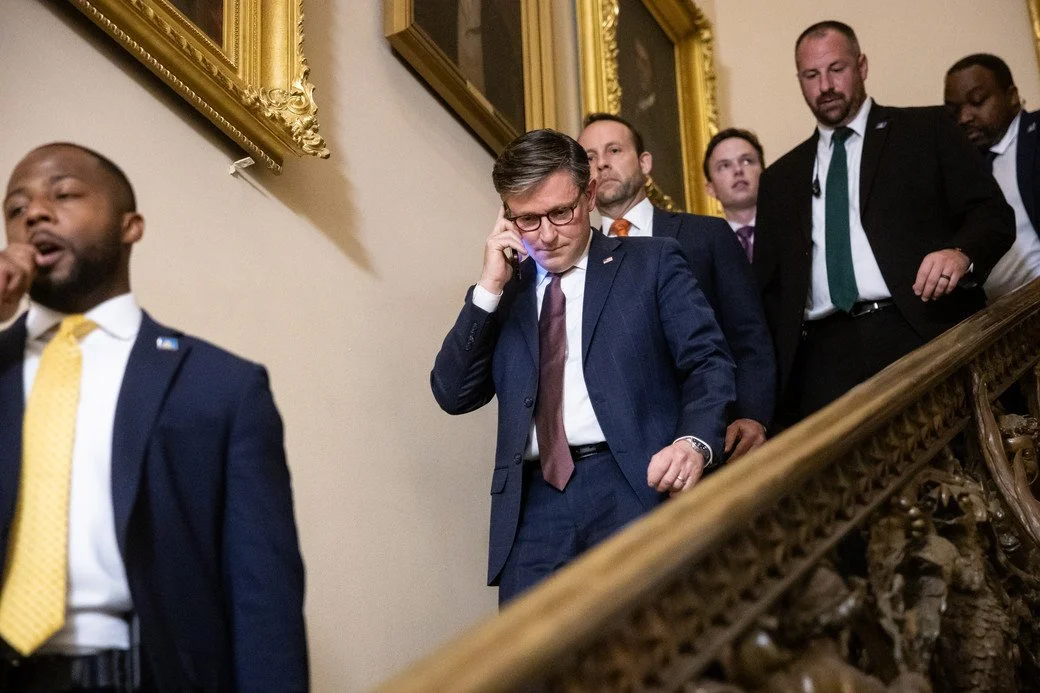
House Republicans on Thursday abruptly pulled a controversial veterans measure after narrowly defeating a Democratic-led effort to force massive revisions to the proposal.
Speaker Mike Johnson blamed “misinformation” about the Take Care of America’s Veterans Act for the decision and said the measure will be delayed for several weeks while leadership considers next steps. Republicans defeated a motion to recommit the bill by a 211-210 vote after lobbying Republican defectors for nearly 30 minutes.
A heated conversation unfolded in the speaker’s ceremonial office as GOP leaders tried to whip holdouts on the bill, according to four people with direct knowledge of the matter, who were granted anonymity to discuss sensitive issues.
The talks grew so intense at one point that Rep. Zach Nunn (R-Iowa) snapped at Rep. Anna Paulina Luna to “listen” to their argument. But Luna kept reiterating she didn’t want to cut veterans’ benefits.
Johnson warned against killing the bill over a few small pieces members didn’t like, but he failed to convince the holdouts. The group broke, and minutes later Johnson pulled the bill from the floor.
The tumult likely kills any chance to pass the legislation before this fall, a major blow for Republican leaders who had hoped to use the bill as a positive development in the midterm elections.
The measure would expand benefits for hundreds of thousands of individuals but pay for it with cuts to some future disability claims. Several GOP members had expressed concern with the funding mechanism in recent days.
The centerpiece of the bill is the Major Richard Star Act, legislation that would increase retirement payouts for around 50,000 combat-injured veterans. A stand-alone version of the proposal has more than 300 co-sponsors in the House and 78 in the Senate, but concerns over the cost — about $13 billion over the next decade — have sidelined the legislation for years.
The bill would pay for the Star Act and a host of other bipartisan benefits expansions with changes in disability ratings in tinnitus and sleep apnea cases. The limits are expected to generate about $57 billion in savings over the next decade, money that will default to the U.S. Treasury if it’s not assigned to other uses.
Questions have surrounded whether the disability changes, which originated in former President Joe Biden’s administration, will go into effect later this year.
Just a few hours before Thursday’s vote, a Veterans Affairs official confirmed that the department is moving ahead with the rules change process, an effort to erase concerns that the costs of the measure may not be covered.
Democratic lawmakers — and advocates like the Veterans of Foreign Wars and Disabled American Veterans — have argued that paying for any new veterans benefits by taking money from other claims sets a troubling precedent.
But a sizable coalition of military advocacy organizations have backed the measure, saying that allowing the potential savings to be returned to the Treasury without any benefit to veterans would be foolish.
Mia McCarthy contributed to this report.
